
How SMBs Can Scale Smarter: Human-Guided Growth in the Age of AI
 Written by
Gigi J.K
Written by
Gigi J.K

SMBs often scale using mismatched tactics and disconnected tools. This blog shows how to blend AI insights with human strategy for scalable, context-driven growth. You’ll learn a six-factor model, governance best practices, and a roadmap that helps small teams avoid burnout and grow with clarity.
• Human judgment + AI power
• Actionable metrics
• Adaptive systems for fast-moving markets
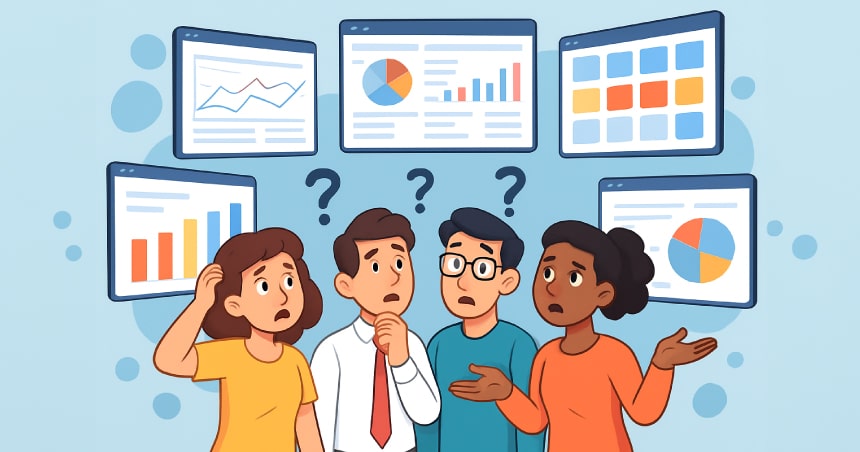
Even with the smartest stacks, dashboards, attribution tools, and AI copywriters, most teams still fly half-blind. These tools give you insights, sure.
But they rarely answer the bigger questions: What should we do next? Why this idea over that one?
Without a clear decision-making framework, busy operators default to whatever seems fastest or cheapest at the moment. It’s survival mode disguised as strategy.
A six-factor model to bring clarity to SMB growth.
Real growth doesn’t come from chasing hacks or copying someone else’s blueprint. It comes from assembling a complete picture of your environment, internal and external, so every decision is grounded in real, contextual logic.
Here’s what that looks like:
The following steps become obvious when these pieces are in one place and easy to analyze. Suddenly, you can spot the exact levers that will move the needle, like adjusting pricing based on market gaps or personalizing outreach to keep more customers around.
How do I know if my SMB is scaling too fast?
If your team is overwhelmed, retention is slipping, or ROI is unclear, you’re likely scaling without guardrails.
Is AI worth it for a 10-person team?
Yes, but only if paired with human insight. Use it for trend spotting, not decision-making in isolation.
What kind of data should I feed my AI systems?
Start with sales trends, customer support logs, and team capacity metrics. Even basic data helps.
How do I make my strategy stick?
Loop in team feedback, simplify execution, and track progress using clarity and velocity metrics.
What are signs my plan isn’t working?
Missed deadlines, team confusion, and stagnating metrics are strong red flags.
What most companies need isn’t just another tool. They need a way to think. A system that makes room for both pattern recognition and practical decision-making. That’s where AI helps, but only if it’s paired with human judgment.
The goal isn’t automation for its own sake. It’s clear. The kind that helps you move with purpose, make tradeoffs faster, and avoid wasting time or budget on the wrong bets.
The rest of this article will discuss how to build that kind of system and why the teams that do so will be better prepared to grow without guesswork.

AI carries exceptional potential for elevating small and mid-sized enterprises. It can sift through volumes of data no human team could ever match and reveal trends that would otherwise remain hidden. Yet finding those trends is just the beginning; the key is translating them into effective action.
Human judgment is what transforms raw insight into purposeful movement. It doesn’t slow anyone down; it steers the effort where it can matter most. More data is not the real win. Success is the capacity to discipline that data to hear the signals, set them against the noise, see them through your organizational lens, and decide what truly merits a response. That takes human thinking.
Governance, when done right, is not a bureaucratic burden. It’s the mechanism that makes insight useful. It threads the gap between stagnant numbers and strategic actions, aligning every choice with your institutional priorities, operational limits, and competitive landscape. The goal is not to mimic someone else’s roadmap; it is to architect a pathway that honors your unique identity, your existing capabilities, and your position on the growth curve.

AI alone isn’t a magic bullet. To truly unlock its power, you need to embed it in a system where human insight leads the way. This system thrives on three crucial inputs, each bringing its own kind of intelligence and accountability.
Everything starts here. AI needs a clear, organized stream of fresh data from every corner of your business:
If your data is scattered or stale, AI can only give you guesses. Timely, centralized info is the foundation for decisions that actually hit the mark.
No matter how clever AI gets, it can’t replace good judgment. This is where your team steps in, bringing nuance, values, and reality checks:
Think of human oversight not as a brake, but as the steering wheel, guiding your strategy so it’s practical, responsible, and aligned with who you are.
The final piece? The eyes and ears of your front-line teams. The insights they share often don’t show up on dashboards but can make or break your plans:
Catching these signals early keeps your strategy nimble. Ignoring them risks turning even the smartest plans into headaches when it’s time to execute.
Let’s be real.
AI can crunch more data in a minute than most teams can in a month. It’s powerful, but raw power isn’t the same as smart strategy.
If you’re leading growth in a startup or SMB, you already know: data without direction just creates noise. What actually moves the needle? Your human filter, your judgment, your values, your feel for the team, and the market you’re in.
That’s where your real edge lies.
It’s not chasing every trending AI tool or plugging in dashboards and hoping for magic. The real shift happens when AI insights meet human clarity, when data is filtered through real-world experience, responsible oversight, and gut-level wisdom.
Done right, that combo becomes your growth safeguard.
It keeps you from defaulting to half-baked ideas and instead helps you shape strategies that are not only actionable but also ethical, contextual, and built for the long game.
So what does that balance look like in practice? Let’s break it down.
Start by letting AI do what it does best: collect and connect the dots. Pull in the six factors we discussed earlier. Think of these as your raw ingredients. AI helps organize them fast and spot patterns you might not see right away.
But don’t stop there.
Before jumping to conclusions, ask the real-world questions:
This human layer is where nuance lives. It’s how you spot the competitor quietly gaining ground. Or the shiny strategy that looks great in a deck but burns out your team in practice.
Don’t wait for dashboards to catch everything. Use simple check-ins with your team. Tap into what customers are saying. Look for friction points, confusion, or missed expectations. These signals keep your strategy grounded and alive.
Because without this human context? Even the most advanced AI output can miss the mark. It might sound smart, but it falls flat in the real world, where culture, capacity, and brand truth still rule the day.
Why this works especially well for SMBs:
When you’re building a business in unpredictable times, the last thing you need is another glossy framework that falls apart under pressure or a tool that floods you with data but leaves you wondering, Now what?
What actually moves the needle is a plan built for your business. One that connects the dots between insight, action, and real outcomes. One that feels right for your team and flexes as you grow.
You need a system that’s:
Here’s how to build it.
Use automation to pull in the info that matters most:
All of this creates a clearer picture, one that helps you spot early signs of change, like a slow demand shift or a competitor gaining quiet traction. That’s when you can act, not react.
Insight without context is just noise. What you need is experienced judgment to ask:
This is where raw data becomes a usable strategy. It helps you steer clear of shiny distractions and double down on what’s real.
Most strategies lose steam because they disconnect from the day-to-day. Don’t let that happen.
Create a simple feedback loop from the people closest to the action:
This input keeps your plan relevant. It helps you shift gears quickly without rewriting the whole playbook. And it ensures your strategy reflects what’s actually happening on the ground, not just what looked good in a workshop.
Why this works (especially for lean teams)
Stand-alone tools often overcomplicate things. Playbooks get outdated fast. But when you combine smart data, human judgment, and live feedback, you build a system that grows with you.
In the end, you don’t need the “perfect plan.” You need a grounded, evolving strategy that helps you make better decisions faster and turn insight into real, lasting momentum.
Being the guardian of your SMB or startup isn’t just about putting smart strategies into play. It’s about making sure they stick and scale with clarity, confidence, and results that actually show up where it counts.
Let’s be honest: even great plans fall apart without the right ways to track progress. You either drown in dashboards that overcomplicate things or follow metrics that look good on paper but don’t tell you what’s really going on.
Here’s how to avoid both traps with a focused set of meaningful metrics and a simple roadmap that works with lean teams and fast-moving goals.
Forget vanity metrics. These four tell you what’s working and where to go next:
Look at how quickly your team goes from planning to action. If you’re cutting timelines from months to weeks (or even days), you’re on the right track. Companies blending AI with human oversight often see 2.5x faster growth and 3.3x better scalability. That’s real momentum.
Track how quickly gaps get closed and issues resolved. Teams that stay proactive, not reactive, see up to a 43% drop in missed opportunities. You’re not just solving problems faster; you’re staying ahead of them.
Measure how much more your team gets done with less friction. When leaders spend just a few focused hours on well-structured planning, it can create ripple effects. High-value tasks can become 2.4x more productive with fewer wasted cycles.
Don’t just chase growth, build staying power. Keep an eye on long-term signals like customer retention (20–40% improvements are common) and how well your team adapts to shifts. This helps you avoid awkward missteps like ignoring ethical risks or cultural fit.
Scaling doesn’t have to mean sprinting on all fronts. The best growth happens in phases, especially for lean teams balancing ambition with bandwidth.
Start by gathering your six core ingredients into one secure, organized space. Run your first AI scans, but don’t rely on the machines alone. Pair insights with human judgment. Focus on spotting the obvious gaps and landing quick wins. And set your baseline metrics so you know what progress actually looks like.
Pick the biggest levers and start turning them. Use curated playbooks, not guesswork, and set up short feedback loops to track speed and efficiency. You don’t need to change everything overnight, just the right things, steadily.
Now it’s time to turn good habits into lasting practices. Set quarterly check-ins around resilience. Learn what’s working. Scale what sticks. And create compounding wins that aren’t just about this quarter but the next few years.
Why this approach stays grounded (and works)
Most teams get pulled in one of two directions:
This method avoids both.
You get a clear, measurable, and human-centered path forward, designed for fast-moving businesses that still care about doing things the right way.
With the right metrics and a rhythm that fits real-world teams, you don’t just scale. You grow with purpose.
Driving growth in today’s SMB or startup landscape means more than quick fixes. It demands laying a strong foundation for what’s ahead. AI offers incredible potential, but without careful guidance, it can lead you into common pitfalls: disconnected strategies, incompatible tools, and hasty decisions that miss real impact. Relying solely on intuition or generic templates often drains resources quietly, leaving critical blind spots unchecked.
The solution isn’t about choosing AI or human insight; it’s about blending both. When you pair intelligent automation with your team’s deep understanding, you unlock an engine that truly fits your business. It adapts with the market, roots every move in ethical judgment, and sharpens your strategy beyond raw data. This approach is not just clever; it’s practical and grounded in your unique reality.
Ignoring governance isn’t just risky; it’s costly. In a world where over 80% of companies integrate AI into their strategies, those who skip human oversight risk losing out on 37 to 43 percent of potential revenue. But those who get this balance right gain agility, precision, and a durable growth path.
So, lean into your role not just as a decision-maker but as a steward of intelligent growth. Embrace the tools, focus on meaningful metrics, and trust your team’s judgment. When AI is directed thoughtfully, it doesn’t just accelerate progress; it helps you build a business that endures.
Start with AI-powered insights but let human strategy guide execution.
AI helps surface patterns and automate data tasks. But human oversight is critical to make strategic, ethical, and brand-aligned decisions. Use AI to augment, not replace, your decision-making.
Because they weren’t designed for your unique market, constraints, or team.
Many SMBs use frameworks meant for different industries, ignoring key differences in goals, capacity, and customers. A growth engine built around your internal and external realities is far more effective.
Yes, with the right system in place.
Lean teams can benefit greatly from AI if they integrate it into a framework that emphasizes clarity, context, and feedback. It reduces guesswork and boosts momentum, without overwhelming the team.
2 combos (1 competitor × 2 dimensions)
20 combos $5 per additional combo
100 combos $4 per additional combo
280 combos $3 per additional combo
7 Steps / 8 – 10 days / 2 – 3 hours of your time
Maximize your impact with ImpelHub’s Growth Lever Identifier—our AI-powered system that discovers your single biggest growth lever and accelerates your success. By analyzing your revenue streams, marketing channels, and core metrics, it highlights the most effective path to scalable growth and pinpoints your highest-ROI strategy, so you can focus on what truly matters, multiply your revenue, and stay ahead in today’s competitive market. Our clear, data-driven action plan ensures you can scale faster and more efficiently than ever.
Insight360, part of the “Your Business” pillar in the Business Brain/Context framework, delivers data-driven insights across 9 categories and 40+ business aspects, including market positioning, competition, revenue, trends, and brand identity.
It drives two key outputs:
With a multidimensional business view, Insight360 helps optimize positioning, enhance engagement, and accelerate growth.
Insight360+ expands on Insight360 with 15 additional dimensions, offering a deeper analysis of business strategy. It provides a self-reflective framework to uncover opportunities in:
With Insight360+, businesses refine strategies, strengthen positioning, and drive sustainable growth.
FanScope is a comprehensive catalog of buyer types, categorized by 10 key attributes, helping decision-makers assess and refine target audiences before segmentation.
As the first step in segmentation, FanScope informs:
By analyzing buyer roles, revenue segments, and purchase probabilities, FanScope enhances targeting, optimizes resources, and improves sales and marketing efficiency.
The Segmentation Module enhances customer targeting with Rated ICPs, Personas, and Firmographics (B2B), assessing each ICP across 22 attributes, including:
ICP Scoring evaluates profiles on 10 numerical dimensions, enabling businesses to prioritize high-value targets efficiently.
FoeScope is a competitive analysis framework that evaluates competitors across three revenue segments—small, medium, and large—relative to the business’s revenue. It assesses:
As a precursor to CounterEdge, FoeScope helps businesses identify and categorize key competitors, setting the stage for deeper competitive strategy development.
CounterEdge analyzes competitor growth strategies, their impact on the business, and countermeasures to stay competitive. It evaluates:
By leveraging CounterEdge, businesses can anticipate threats, mitigate risks, and implement winning strategies.
NextMove is a growth strategy framework that helps businesses identify, evaluate, and implement high-impact strategies. Each strategy is numerically rated across 10 dimensions, similar to ICP Rating, to prioritize the most effective paths for expansion.
With NextMove, businesses gain a data-driven approach to strategic growth, ensuring scalability, market expansion, and long-term success.
Launch-Execution Blueprint creates high-level execution plans for growth strategies, prioritizing them based on impact, feasibility, and business alignment.
By leveraging Launch-Execution Blueprint, businesses can streamline execution, focus on high-impact strategies, and drive measurable growth.
Maximize your impact with ImpelHub’s AI-powered Growth Lever Identifier. By analyzing revenue streams, marketing channels, and core metrics, it uncovers your biggest growth lever and highest-ROI strategy.
With a clear, data-driven action plan, you can focus on what matters, scale faster, and stay ahead in today’s competitive market.
Maximize your impact with ImpelHub’s Growth Lever Identifier—our AI-powered system that discovers your single biggest growth lever and accelerates your success. By analyzing your revenue streams, marketing channels, and core metrics, it highlights the most effective path to scalable growth and pinpoints your highest-ROI strategy, so you can focus on what truly matters, multiply your revenue, and stay ahead in today’s competitive market. Our clear, data-driven action plan ensures you can scale faster and more efficiently than ever.
Feature Gap Analysis is a powerful tool within ImpelHub that identifies missing or desired features based on the needs and expectations of the target audience. By leveraging Business Brain, it ensures that feature recommendations are strategically aligned with business goals and market demand.
Key Benefits:
Identifies Missing Features – Pinpoints gaps in the product or service offering.
Aligns with Target Audience Needs – Ensures features meet user expectations.
Prioritization via Impact Scoring – Helps decision-makers invest wisely.
Data-Driven Scoring Mechanism
Each feature is rated across five numerical dimensions, enabling businesses to prioritize development efforts effectively:
Revenue Boost
Cost Reduction
Customer Acquisition
Customer Retention
Customer Satisfaction
By leveraging Feature Gap Analysis, businesses can make informed investment decisions, enhance their product-market fit, and drive customer engagement and growth
UXI (User Experience Investigation) is a UI/UX audit framework that evaluates core business pages with unparalleled depth, powered by ImpelHub Audit. Unlike standard audits, ImpelHub leverages Business Brain, ensuring that recommendations are contextually aligned with the company’s strategy, market position, and growth objectives.
Key Audit Components:
Feature & Objective – Identifies key UI/UX elements and their purpose.
Details & Justification – Explains audit findings in a business-relevant manner.
Impact & Area – Evaluates influence on user experience.
Rationale – Context-driven reasoning for suggested improvements.
Impact-Driven Scoring Mechanism
Each UI/UX strategy is numerically rated across five dimensions, helping decision-makers prioritize investments:
Revenue Boost
Cost Reduction
Customer Acquisition
Customer Retention
Customer Satisfaction
This data-driven scoring allows businesses to allocate resources effectively, ensuring maximum ROI on UI/UX improvements and driving sustained growth
Detailed Execution Blueprint is a task list and project roadmap that breaks down high-level strategies into step-by-step, week-by-week execution plans, ready for team assignment and implementation.
Key Features:
Detailed Task Breakdown – Converts strategies into actionable steps.
Week-by-Week Execution Timeline – Ensures structured and phased implementation.
Team Assignments – Each plan is ready to be assigned to the relevant team for execution.
Operational Clarity & Accountability – Provides a clear roadmap to track progress.
By leveraging Launch-Detailed Plan, businesses can ensure smooth execution, improve efficiency, and drive successful implementation
FanScope is an extensive catalog of potential buyer types, both direct and indirect, categorized using 10 key attributes. It helps decision-makers identify, evaluate, and include or exclude buyer types before the segmentation process.
As the first step toward segmentation, FanScope informs:
ICP (Ideal Customer Profile) Definitions
Persona Development
Firmographics (B2B segmentation)
ICP Scoring
By analyzing buyer roles, revenue segments, pain points, and purchase probabilities, FanScope enables businesses to refine their target audience, optimize resource allocation, and improve sales and marketing efficiency.
The Segmentation Module refines customer targeting through Rated ICPs, Personas, and Firmographics (B2B). Each ICP is assessed across 22 attributes, covering:
Profile & Behavior – Segment, characteristics, decision-makers, and buying behavior.
Business Fit – Pain points, goals, product needs, and purchase drivers.
Engagement Factors – Technology, content consumption, marketing channels, and objections.
Strategic Insights – Value proposition, competition, and customer service needs.
ICP Scoring rates each profile on 10 numerical dimensions, helping decision-makers quickly prioritize the best targets for sales and marketing strategies
FoeScope is a competitive analysis framework that identifies and evaluates competitors across three revenue segments—small, medium, and large—relative to the business’s revenue. It assesses competitors based on:
Key Products/Services – Most similar offerings.
Geography – Market overlap.
Target Audience – Shared customer base.
Similarity Score & Reasoning – Measures alignment with the business.
FoeScope serves as a precursor to CounterEdge, laying the groundwork for deeper competitive strategy development by helping businesses identify and categorize their most relevant competitors
CounterEdge analyzes competitor growth strategies, their impact on the client’s business, and countermeasures to stay competitive. It evaluates:
Competitor Strength & Market Impact – Key advantages and threat level.
Affected Business Touchpoints – Areas influenced by competition.
Adaptation Strategy – Actionable countermeasures.
Impact Grade & Rationale – Severity of threat (1-5).
Potential Business Benefits – Strategic opportunities.
By leveraging CounterEdge, businesses can anticipate threats, mitigate risks, and implement winning strategies.
NextMove is a growth strategy framework designed to help businesses identify, evaluate, and implement high-impact strategies. Each strategy is numerically rated across 10 dimensions, similar to ICP Rating, allowing decision-makers to prioritize the most effective paths for expansion.
Key Assessment Areas:
Strategy Type, Objective & Target Audience – Defines the approach, aligns with Ideal Customer Profiles (ICPs), and ensures relevance to market needs.
Key Tactics & Content Marketing – Outlines the execution plan, including marketing initiatives to drive engagement.
Required Resources & Risk Assessment – Identifies necessary investments, potential risks, and feasibility.
Timeline & Measurement Metrics – Provides a structured roadmap for execution and tracking success.
Relevance (%) & Potential Impact – Scores strategies based on alignment with business goals, market trends, and competitive landscape.
By leveraging NextMove, businesses gain a data-driven approach to strategic growth, enabling them to quickly assess and implement the most effective strategies for scalability, market expansion, and long-term success.
GTM/Scale Up Playbook creates high-level execution plans for selected growth strategies, ensuring effective implementation. It prioritizes strategies based on impact, feasibility, and alignment with business objectives.
Key Components:
Phases – Defines the execution stage.
Strategy Score – Numerical rating for prioritization.
Strategy Suggestions & Rationale – Recommended actions with justification.
Highlights – Key takeaways and strategic advantages.
Related Strategy – Links to complementary approaches.
Targeted ICPs (ICP Phase) – Aligns execution with the right customer segments.
By leveraging GTM/Scale Up Playbook, businesses can streamline execution, focus on high-impact strategies, and drive measurable growth.
Insight360 is a key component of the “Your Business” pillar within the Business Brain/Context framework. It delivers data-driven insights across 9 key categories, covering 40+ critical business aspects, including market positioning, competitive landscape, revenue analysis, industry trends, and brand identity.
These insights drive two strategic outputs:
Custom Growth Strategies – Tailored plans developed with AI, Impelian, Impelist, and human expertise to support business expansion and address key challenges.
Contextual UI/UX Audit – Identifies feature gaps and aligns product offerings with market needs.
Insight360 provides a multidimensional understanding of the business, industry, and competitive landscape. By leveraging these insights, businesses can optimize market positioning, enhance customer engagement, and accelerate growth.
Insight360+ enhances Insight360 by analyzing a business at a deeper level through 15 additional dimensions. It provides a self-reflective framework to uncover strategic opportunities in:
Sales & Revenue Optimization – Pricing models, sales processes, and client strategies.
Market & Digital Presence – Online marketing, industry positioning, and partnerships.
Innovation & Technology – AI /Tech integration and product/service development.
With Insight360+, businesses gain a more comprehensive perspective to refine strategies, strengthen market positioning, and drive sustainable growth.

Founder & CEO

Co-Founder & Chief Revenue Officer
Please enter your email to download the Sample Score Card.
Please enter your email to download the playbook.
Unlock exclusive tools for growth